
Excavator daily pre-use check sheet
The 17 checks an operator makes before using a excavator each day, on one printable sheet that covers a week. Free to print and use, no account needed.
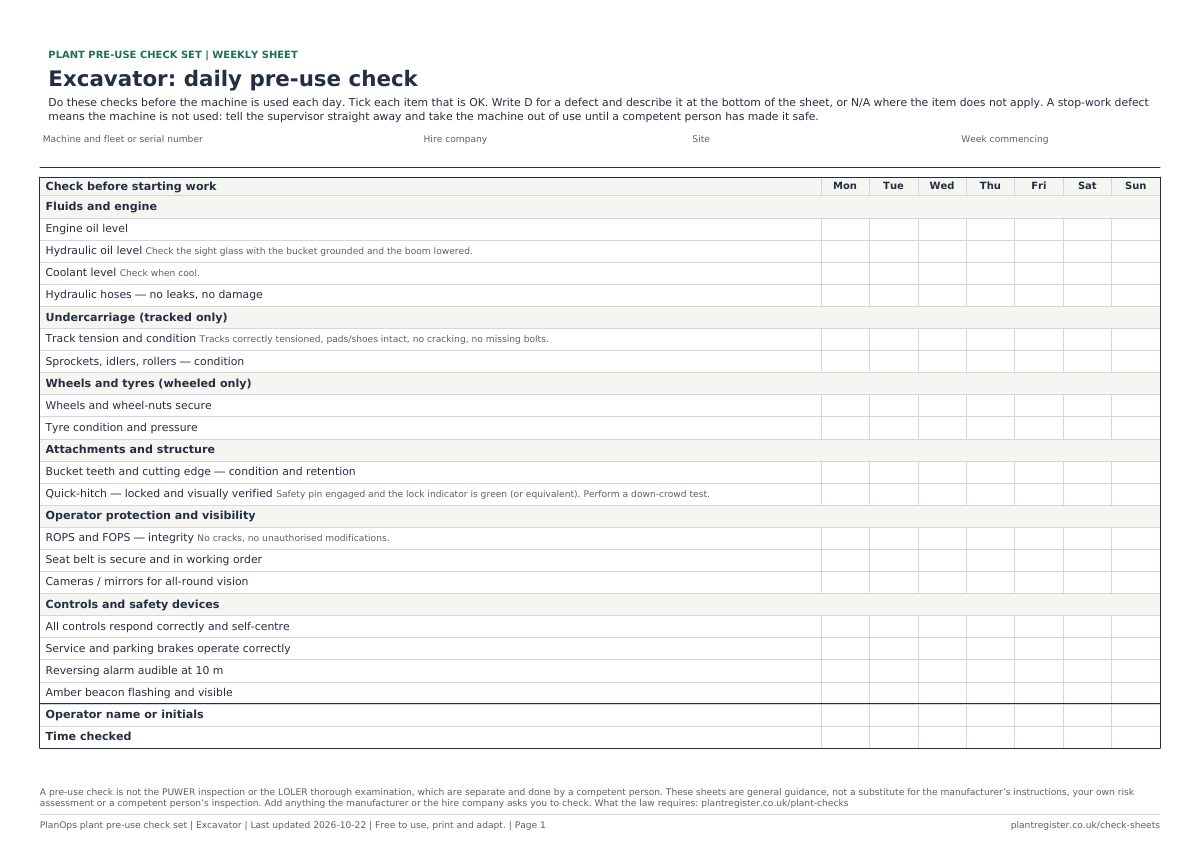
The checks on the sheet
Fluids and engine
- Engine oil level
- Hydraulic oil level
Check the sight glass with the bucket grounded and the boom lowered.
- Coolant level
Check when cool.
- Hydraulic hoses — no leaks, no damage
Undercarriage (tracked only)
- Track tension and condition
Tracks correctly tensioned, pads/shoes intact, no cracking, no missing bolts.
- Sprockets, idlers, rollers — condition
Wheels and tyres (wheeled only)
- Wheels and wheel-nuts secure
- Tyre condition and pressure
Attachments and structure
- Bucket teeth and cutting edge — condition and retention
- Quick-hitch — locked and visually verified
Safety pin engaged and the lock indicator is green (or equivalent). Perform a down-crowd test.
Operator protection and visibility
- ROPS and FOPS — integrity
No cracks, no unauthorised modifications.
- Seat belt is secure and in working order
- Cameras / mirrors for all-round vision
Controls and safety devices
- All controls respond correctly and self-centre
- Service and parking brakes operate correctly
- Reversing alarm audible at 10 m
- Amber beacon flashing and visible
PUWER doesn’t itself require a daily check or a written record of one. HSE’s construction guidance does recommend daily checks for some plant, such as dumpers and MEWPs, and a written sheet is the easiest way to show the check was done and a defect was reported. A pre-use check is not the PUWER inspection or the LOLER thorough examination: those are separate, by a competent person, and recorded. What the law requires, with the sources.
These sheets are general guidance, not a substitute for the manufacturer’s instructions, your own risk assessment or a competent person’s inspection. Add anything the manufacturer or the hire company asks you to check.