
Crane daily pre-use check sheet
The 17 checks an operator makes before using a crane each day, on one printable sheet that covers a week. Free to print and use, no account needed.
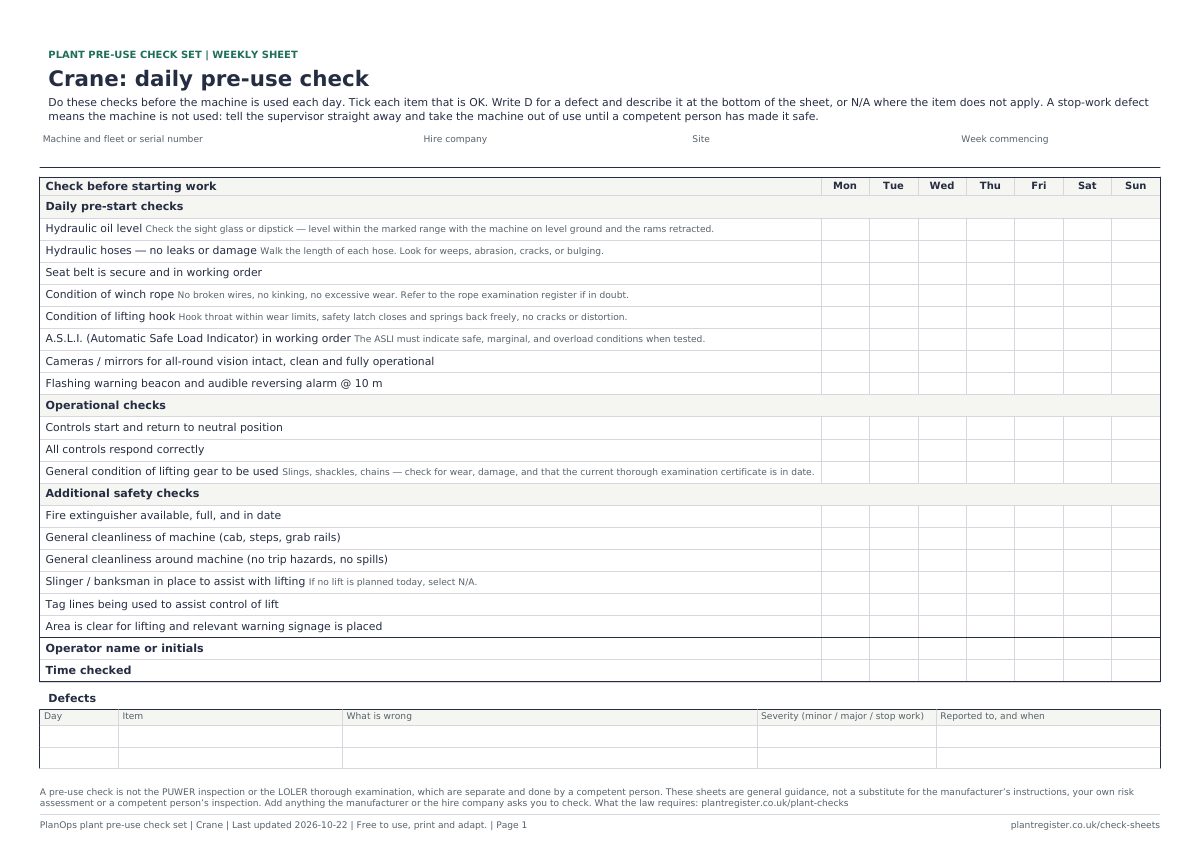
The checks on the sheet
Daily pre-start checks
- Hydraulic oil level
Check the sight glass or dipstick — level within the marked range with the machine on level ground and the rams retracted.
- Hydraulic hoses — no leaks or damage
Walk the length of each hose. Look for weeps, abrasion, cracks, or bulging.
- Seat belt is secure and in working order
- Condition of winch rope
No broken wires, no kinking, no excessive wear. Refer to the rope examination register if in doubt.
- Condition of lifting hook
Hook throat within wear limits, safety latch closes and springs back freely, no cracks or distortion.
- A.S.L.I. (Automatic Safe Load Indicator) in working order
The ASLI must indicate safe, marginal, and overload conditions when tested.
- Cameras / mirrors for all-round vision intact, clean and fully operational
- Flashing warning beacon and audible reversing alarm @ 10 m
Operational checks
- Controls start and return to neutral position
- All controls respond correctly
- General condition of lifting gear to be used
Slings, shackles, chains — check for wear, damage, and that the current thorough examination certificate is in date.
Additional safety checks
- Fire extinguisher available, full, and in date
- General cleanliness of machine (cab, steps, grab rails)
- General cleanliness around machine (no trip hazards, no spills)
- Slinger / banksman in place to assist with lifting
If no lift is planned today, select N/A.
- Tag lines being used to assist control of lift
- Area is clear for lifting and relevant warning signage is placed
PUWER doesn’t itself require a daily check or a written record of one. HSE’s construction guidance does recommend daily checks for some plant, such as dumpers and MEWPs, and a written sheet is the easiest way to show the check was done and a defect was reported. A pre-use check is not the PUWER inspection or the LOLER thorough examination: those are separate, by a competent person, and recorded. What the law requires, with the sources.
These sheets are general guidance, not a substitute for the manufacturer’s instructions, your own risk assessment or a competent person’s inspection. Add anything the manufacturer or the hire company asks you to check.